

A Maryland farmer expanding a fifth-generation operation in Carroll County, a poultry grower in Wicomico, or a vineyard owner in Garrett County faces legal questions that a generalist business lawyer rarely encounters. The questions interlock: which entity structure separates farming liability from passive landownership, whether the operation qualifies for a MALPF easement and what an easement does to future flexibility, how Maryland’s Right-to-Farm Act protects against nuisance suits from new residential neighbors, what MDA licenses apply to specific commodities, and how the next generation takes over without triggering estate or transfer tax problems. A Maryland business law attorney advising agribusiness clients works through these issues in a particular sequence, and getting the sequence wrong can foreclose options later. This post lays out how the work actually fits together.
Entity structure for agricultural operations
Most Maryland farms operate as sole proprietorships or general partnerships by default, which leaves the operator personally liable for everything from a tractor accident to a tort claim by a farm worker. The structural fixes most commonly used in Maryland agriculture:
- Operating LLC for the farming business. Liability shield for day-to-day operations, employees, equipment, livestock, and contracts. Filed with SDAT for $100, with the $300 annual report due each April 15.
- Separate landholding LLC for the real estate. Holds title to the farm in a separate entity from the operating company, leasing the land to the operating LLC. This separates real estate liability from farm operations liability and supports succession planning by allowing the land to be transferred separately from the active business.
- Series of LLCs or sister LLCs for multi-enterprise operations (crops, livestock, agritourism, value-added processing), each separating its own liability stream.
- S corporation or partnership tax election depending on the structure of compensation to family members and the desire to manage self-employment tax.
Agricultural cooperatives organized under Md. Code Ann., Corps. & Ass’ns Title 5 are also available and useful for marketing cooperatives, dairy associations, and similar collective structures.
The landholding-plus-operating structure has a second benefit: it positions the land for a MALPF easement (which restricts development on real estate held in the landholding entity) without compromising the operating business.
MALPF and county land preservation easements
The Maryland Agricultural Land Preservation Foundation, administered by the Maryland Department of Agriculture, purchases agricultural preservation easements that permanently restrict non-agricultural development on prime farmland and woodland. Since 1980, MALPF has preserved more than 350,000 acres across all 23 counties and has invested over $900 million.
Eligibility requirements for the FY2027 cycle:
- Minimum of 50 contiguous acres (smaller parcels may qualify if adjacent to an already-preserved farm and the parcel has at least one unused development right)
- Land must lie outside the 10-year water and sewer service area plan, unless the property has extraordinary productive capability
- At least 50 percent Class I, II, or III soils, or Woodland Groups I and II
- At least one unused development right associated with the property
Applications for the FY2027 cycle are due to county program administrators by May 15, 2026 (deadlines vary slightly by county). The County Agricultural Land Preservation Advisory Board ranks applications using the state-mandated Land Evaluation and Site Assessment system before forwarding qualifying applications to MALPF.
MALPF is one option, not the only one. Counties operate their own land preservation programs (Maryland Environmental Trust easements, county Critical Farms programs, and Rural Legacy Program easements) with different eligibility criteria, payment structures, and use restrictions. A farm may be a better fit for a county program than for MALPF, or may benefit from stacking compatible easements over time.
What a Maryland Business Law Attorney evaluates before recommending an easement
An easement is permanent. The analysis before recommending one includes:
- Current and projected farm income vs. lump-sum easement payment math
- Estate tax implications, including the federal qualified conservation contribution deduction and Maryland inheritance tax considerations
- Permitted-use restrictions and how they constrain future agritourism, value-added processing, alternative energy, or housing options
- Mortgage subordination requirements and lender consent
- The MALPF Permitted Uses Policy and its limits on non-agricultural activities
- Family succession plans and whether the easement complicates intra-family transfers
A farm that needs flexibility for an unbuilt cidery, a future solar installation, or an event venue may want a different easement structure or no easement at all.
Maryland Right-to-Farm Act protections
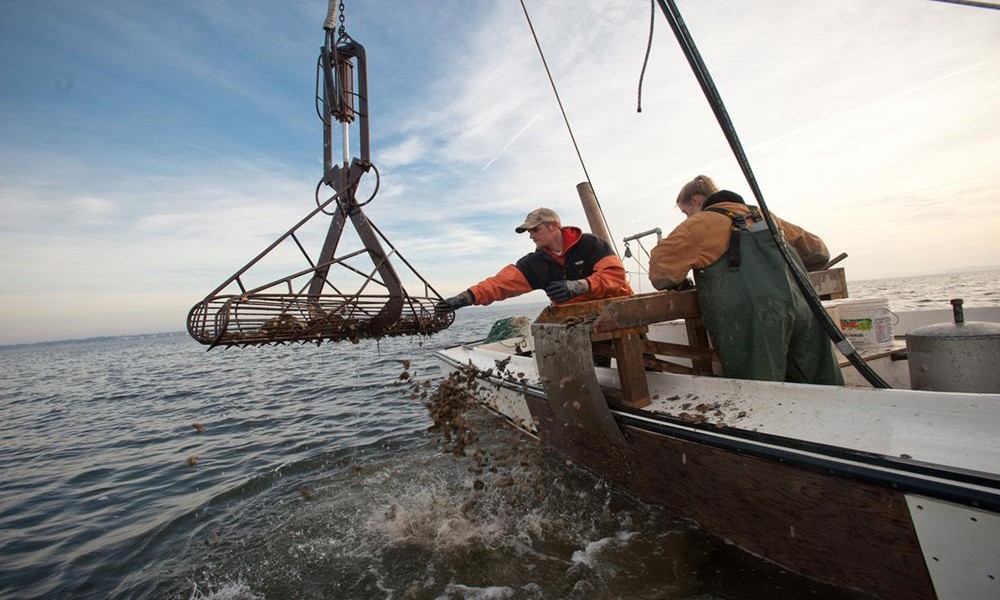
Maryland’s Right-to-Farm Act, codified at Md. Code Ann., Cts. & Jud. Proc. § 5-403, provides an affirmative defense to nuisance actions brought against agricultural operations. The protection covers operations involved in processing agricultural crops or on-farm production, harvesting, or marketing of agricultural, horticultural, silvicultural, aquacultural, or apicultural products. A 2009 amendment extended protection to silvicultural operations, and a 2014 amendment extended it to commercial seafood operations and watermen.
The protection requires:
- The operation has been in business for at least one year
- The operation complies with all applicable federal, state, and local laws, ordinances, and permits
- The operation is not conducted in a negligent manner
- A nutrient management plan is in place if required by law
Twenty-two of Maryland’s 23 counties have adopted parallel county Right-to-Farm ordinances. The common county language protects operations conducted in accordance with Generally Accepted Agricultural Management Practices (GAAMPs). Most county ordinances require either review by a county Agricultural Reconciliation or Review Board, or mediation through Maryland’s Agricultural Conflict Resolution Service, before a nuisance suit can proceed in court. Many county ordinances also require real estate transfer disclosure notifying purchasers near agricultural land of the area’s farming character.
The defense matters when residential development encroaches on existing agricultural operations. A farm sued by a new neighbor for odors, dust, or noise has a meaningful defense if the GAAMP and procedural requirements are documented.
MDA licensing and regulatory compliance
Specific agricultural operations require MDA licenses or registrations:
- Maryland Department of Agriculture pesticide applicator certifications for any commercial pesticide use
- Nutrient management plans and certifications under Maryland’s Water Quality Improvement Act
- Concentrated Animal Feeding Operation (CAFO) permits for operations meeting threshold sizes
- Maryland Department of Health licenses for value-added processing, including dairy, on-farm slaughter, and commercial kitchens
- Maryland Comptroller agricultural sales and use tax exemption certificates for qualifying inputs
- Maryland Department of the Environment permits for stormwater, wetlands, or aquaculture
- Maryland Horse Industry Board licenses for equine operations
- Maryland Alcohol and Tobacco Commission licenses for farm wineries, breweries, and distilleries under Md. Code Ann., Alc. Bev.
The mix changes with the commodity. A grain farm faces different licensing than a poultry operation, a dairy, an apiary, or a vineyard, and the operating entity’s compliance posture has to track each applicable license.
Farm succession planning
The single most important conversation in Maryland agribusiness law usually starts with succession. The structural tools:
- Limited partnership or LLC structures that allow operational control to remain with the senior generation while gifting non-managing interests to the next generation
- Buy-sell agreements among family members triggering at death, retirement, or disability
- Life insurance funding for cross-purchase obligations
- Use of the federal qualified conservation contribution deduction in coordination with MALPF easements
- Section 2032A special-use valuation for federal estate tax purposes
- Disclaimers and qualified domestic trusts where the next generation includes non-citizen spouses
A succession plan built around the wrong entity structure or without coordination with a MALPF easement can produce results the family did not intend.
Bottom line
Maryland agribusiness law sits at the intersection of entity structure, real estate, regulatory compliance, and estate planning, and few firms in the DC-Maryland-Virginia corridor handle the full set credibly. A consultation with a Maryland business law attorney experienced in agricultural matters can sequence entity formation, evaluate MALPF eligibility, structure Right-to-Farm compliance, audit MDA licensing, and design a succession plan that respects the family’s actual goals. Useful background reading: MDA at mda.maryland.gov, the Maryland Agricultural Land Preservation Foundation at mda.maryland.gov/malpf, and University of Maryland Extension’s agricultural law resources at extension.umd.edu. Internal pages worth pairing with this post include the firm’s Maryland Agricultural Regulations & Compliance overview, an LLC formation guide, and a fractional general counsel overview.