

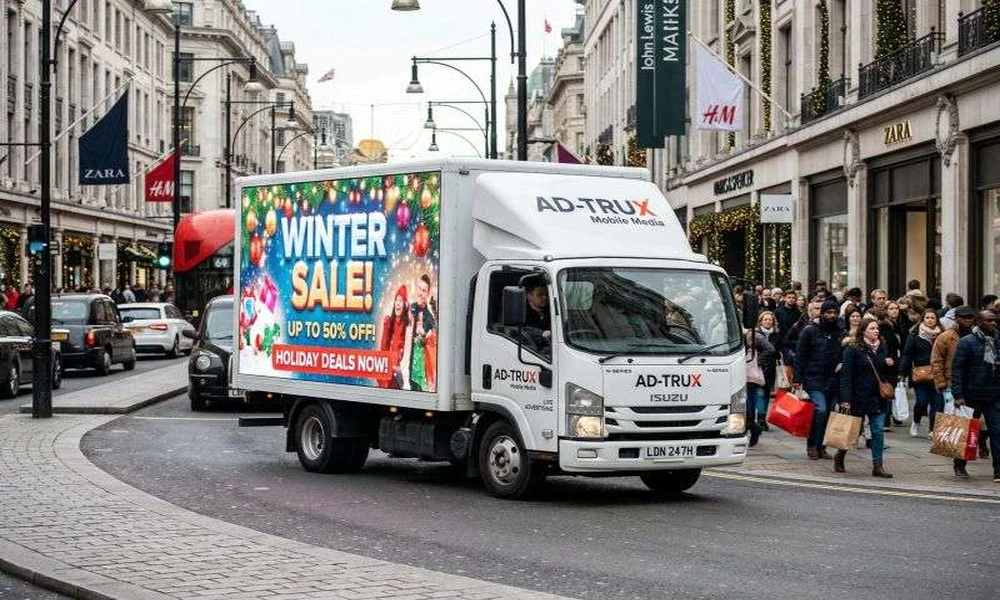
Three variables drive recall rates for marketing managers using led billboard truck encounter
- Frequency
- Message relevance
- Audience dwell time
Led billboard truck route planning controls all three directly. Encounter frequency determines how many times the target audience sees the message across the campaign period. Relevance determines how attentively the audience processes it in each zone. Dwell time determines how completely the audience encodes the message before the display moves out of their visual range. Fixed placements control none of these variables once the booking is confirmed.
- Repeated audience encounter frequency
Encounter frequency drives recall because a single impression produces recognition but not retention. The message needs to reach the same audience more than once across consecutive activation days to move from recognition into active memory.
- Commuter corridor frequency
Commuter corridor routing drives recall because the same audience travels the same transit path on consecutive mornings. The led billboard truck covers those corridors on successive activation days, delivering the same message to the same audience repeatedly.
- Retail precinct frequency
Retail precinct routing drives recall because shoppers return to the same commercial zones across a campaign period. Each successive encounter within a purchase-oriented environment reinforces the message at the point where buying decisions are actively being made, raising the probability the audience responds to the message during the campaign window.
- Residential street frequency
Residential street routing drives recall because the target demographic moves through the same familiar corridors daily. Encountering the message within a known personal environment causes the audience to associate it with their own surroundings rather than filtering it as an external advertisement, which raises retention directly across each consecutive activation day.
- Message relevance per zone
Message relevance drives recall because an audience processes a message more attentively when it matches their immediate context. A mismatched message in any zone produces low recall regardless of how many times the display passes through that corridor during the activation window.
- Retail zone messaging
Retail zone messaging drives recall because shoppers in commercial precincts are already in a purchase-oriented mindset when they encounter the display. A product or promotional message served in that environment aligns directly with what the audience is already thinking about, raising processing depth and recall within that specific zone.
- Transit corridor messaging
Transit corridor messaging drives recall because a message matched to the commuter profile present in those routes during peak travel periods aligns with the audience context rather than introducing irrelevant content the commuter audience filters out before processing it during that movement period.
- Leisure district messaging
Leisure district messaging drives recall because post-work audiences in dining and entertainment zones carry higher attention availability than commuter audiences under time pressure.
- Dwell time and display exposure
Dwell time drives recall because longer exposure gives the audience time to process the full message rather than registering only the most visible element before the display moves out of their line of sight.
- Pedestrian zone dwell
Pedestrian zone routing drives recall because audiences in shopping precincts move at the lowest speed of any outdoor environment outside event perimeters. Low movement speed extends each display encounter, giving the audience enough time to process the complete message rather than a partial impression at transit speed.
- Event perimeter dwell
Event perimeter routing drives recall because pre-event and post-event audiences are stationary or near-stationary within defined entry and dispersal corridors. When a led billboard truck is placed at event perimeter positions across the activation window, this type of exposure enhances the strongest message encoding of any outdoor lived environment.
Consecutive corridor routing improves encounter frequency. Zone-matched creative raises message relevance. Pedestrian and event perimeter positioning extends dwell time. Each variable is controlled through route and creative decisions rather than fixed placement conditions.