

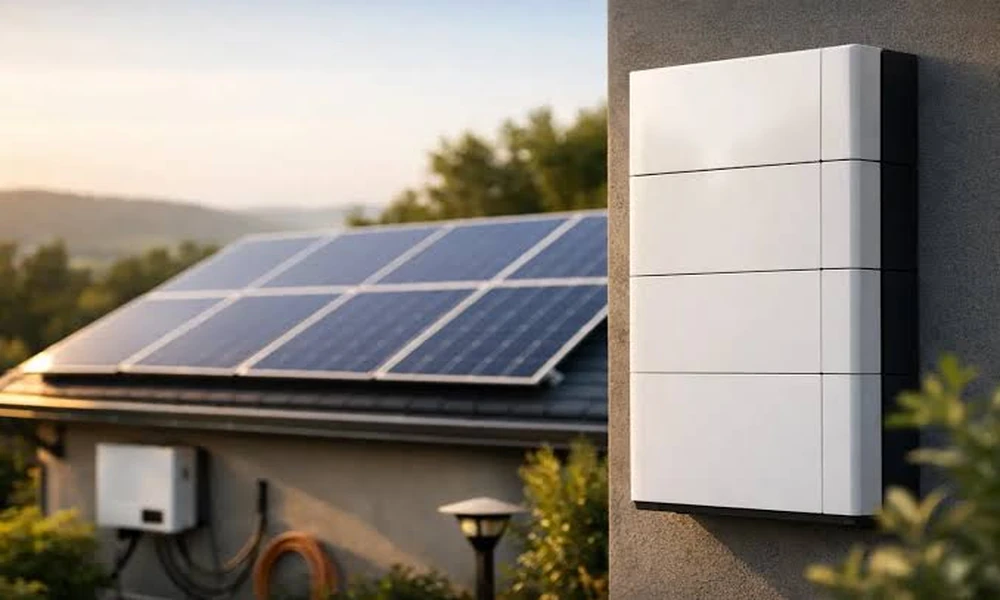
More households across the United Kingdom are now looking to harness the power of the sun. By capturing renewable energy through rooftop panels, they can generate their own electricity. The next logical step is to store this power for use when the sun isn’t shining.
Data from 2026 shows a clear trend. A growing number of properties aim to reduce their dependence on the national electricity grid. Storing surplus power for later use is becoming a cornerstone of modern domestic energy strategy.
Frontier Energy Ltd provides expert guidance on integrating these storage solutions. The company offers professional insights into the evolving landscape of domestic power generation. Understanding the benefits of modern technology is key for homeowners.
Adding a storage unit to an existing panel setup can unlock significant advantages. We examine the financial and environmental implications of such an installation. Maximising the efficiency of your renewable power source is a smart move.
Grasping the nuances of power management is essential. It allows individuals to optimise their consumption effectively in today’s market. Making informed choices leads to greater control and potential savings.
Key Takeaways
- Capturing solar power allows for the generation of personal electricity.
- Storing this renewable energy reduces reliance on the national grid.
- Professional guidance, from companies like Frontier Energy Ltd, is available for integration.
- Installing a storage unit offers both financial and environmental benefits.
- Effective energy management is crucial for optimising domestic consumption.
- Modern technology enhances the efficiency of a renewable power setup.
- Informed decisions can lead to greater energy independence and control.
Overview of Home Battery Storage Systems for Solar Energy
The integration of power storage with photovoltaic technology represents a significant advancement in domestic energy management. Recent research indicates substantial adoption, with a 2024 survey of over 2,000 photovoltaic owners revealing that 43% had already invested in this technology.
A solar battery allows property owners to retain electricity produced by their panels. This power can then be utilised during evening hours or sold back to the national network. These units ensure that daytime generation is not wasted.
Many find this technology vital for achieving greater independence from traditional grid supplies and managing costs. The underlying technology has evolved considerably, with contemporary units offering more reliable performance for typical domestic setups.
| Technology Type | Typical Capacity (kWh) | Key Feature | Suitability |
|---|---|---|---|
| Lithium-ion | 5-15 | High efficiency, long lifespan | Most residential applications |
| Lead-acid | 2-10 | Lower initial cost | Budget-conscious projects |
| Saltwater | 5-20 | Fully recyclable, non-toxic | Eco-focused installations |
| Flow Batteries | 10-50 | Excellent scalability | Larger property requirements |
Selecting the appropriate solution depends on individual consumption patterns and property characteristics. Professional assessment helps determine the optimal configuration for each specific situation.
How Home Battery Storage Integrates with Solar Panels
A property’s renewable setup becomes far more capable when its generation and retention components work in unison. This integration allows captured daylight to be used long after sunset, maximising self-consumption.
Understanding the Role of Inverters
Photovoltaic panels generate a direct current (DC). Household appliances require alternating current (AC). The inverter performs this critical conversion.
This device also manages the flow of electricity. It decides whether to send power to the property, charge the retention unit, or export to the grid. For a typical three-bedroom house to run off-grid, industry standards suggest around 4.8kW of photovoltaic output is necessary.
As one expert notes,
“The inverter is the intelligent conductor of your personal power orchestra, ensuring every watt is utilised optimally.”
Differences Between AC and DC Battery Systems
The choice between AC and DC-coupled units is fundamental. It hinges on whether you are installing a new photovoltaic array or retrofitting to an existing one.
A DC-coupled solar battery is often more efficient for new installations. The electricity flows from the panels to the unit before a single inverter handles conversion for the house. An AC-coupled system is typically easier to add to a current solar panel system, as it connects via its own dedicated inverter.
| Feature | AC-Coupled System | DC-Coupled System |
|---|---|---|
| Installation Scenario | Retrofit to existing solar panel system | New installation with panels |
| Overall Efficiency | Slightly lower | Higher |
| Typical Use Case | Seamless integration upgrade | Maximised performance from day one |
| Integration Complexity | Lower | Higher |
Selecting the correct configuration ensures the entire setup operates smoothly and delivers the intended savings.
Benefits and Cost-Saving Potential
One of the most compelling reasons to invest in modern power technology is the direct impact on monthly outgoings. The ability to capture and retain self-generated electricity transforms a household’s financial relationship with the national grid.
Reducing Energy Bills with Stored Power
By holding surplus daytime generation, a property can drastically cut its need to purchase expensive electricity after dark. For a typical three-bedroom house, this can mean annual savings of around £582 when a high-efficiency photovoltaic array is paired with a retention unit.
This approach directly lowers your energy bills. It also provides a buffer against peak-time pricing tariffs from suppliers.
| Factor Influencing Savings | Low Impact Scenario | High Impact Scenario | Key Consideration |
|---|---|---|---|
| Daily Consumption Pattern | Low evening use | High evening use | Aligns usage with stored power |
| System Size & Capacity | Smaller photovoltaic setup | Larger array with ample storage | Matches generation to needs |
| Energy Tariff Type | Fixed rate | Time-of-use tariff | Maximises price arbitrage |
Many users find the ability to store electricity lets them save money strategically. The long-term financial return hinges on the initial setup cost and daily management of consumption.
Integrating a solar battery isn’t just a purchase; it’s a strategic financial decision that pays back over the lifespan of the equipment.
Investing in a solar battery is a move that secures future price stability. It simultaneously reduces a household’s carbon footprint over time.
Choosing the Right Solar Battery for Your Home
Key factors like usable capacity and physical dimensions guide the selection of a domestic power bank. The investment typically ranges from £1,500 to £10,000, with a standard setup costing around £5,000.
Understanding Battery Capacity and Performance
Total capacity, measured in kilowatt-hours (kWh), must align with daily household consumption. It should also match the output from your photovoltaic panels.
Modern units allow access to between 85% and 95% of their stored electricity. This usable portion is crucial for effective daily cycling.
| Selection Factor | Key Consideration | Typical Range/Impact |
|---|---|---|
| Usable Capacity | Percentage of stored energy accessible | 85% – 95% |
| System Price | Linked directly to total kWh rating | £1,500 – £10,000 |
| Daily Cycle | Energy used from the unit each day | Should match household needs |
Correctly sizing your power cell is the single most important step to ensure it meets your daily requirements without overspending.
Installation Considerations and Space Requirements
Professional fitting is essential for safety and performance. The unit must be placed in a well-ventilated area, away from direct sunlight.
This prevents overheating and preserves the internal cells. Adequate clearance around the equipment is often required.
Planning for future expansion is wise. Ensure there is sufficient room to add more capacity later if needs change.
Optimising Energy Use with the Smart Export Guarantee
A key government-backed initiative, the Smart Export Guarantee (SEG), transforms how surplus domestic electricity is valued. This scheme is vital for anyone seeking to maximise financial returns from their photovoltaic panels.
It mandates that energy suppliers pay for any excess power fed back into the national network.
Comparing Solar Export and Home Storage
The economics are clear. Under the SEG, the best open-market rate pays 15.1p per kilowatt-hour (kWh) for exported electricity.
Conversely, buying power from the grid costs an average of 28p/kWh under the Energy Price Cap. This significant difference makes using your own stored power far more economical.
- Export Surplus: Earn 15.1p/kWh by selling excess generation back to the grid via a SEG tariff.
- Store and Use: Avoid paying 28p/kWh by utilising your own retained electricity when needed.
To benefit fully, homeowners should compare different SEG tariffs to secure the best deal. Having a smart meter is essential, as it provides the actual data needed for accurate export payments.
Safety and Practical Installation Considerations
Safety protocols and correct positioning form the bedrock of any successful domestic energy storage project. A professional and certified installation is non-negotiable for both performance and safety. Homeowners should always verify their installer is registered with the Renewable Energy Consumer Code (RECC). This provides vital consumer protection.
For certified battery storage issues, you can contact the MCS helpdesk on 0333 103 8130. Installers must address formal complaints about system performance within 14 days of receipt.
Proper Placement and Ventilation
Where you locate your unit is crucial. It should be kept indoors, in a cool, dry place away from direct sunlight. Position it close to your main consumer unit. This reduces cable length and minimises power loss.
Adequate ventilation is essential to prevent overheating risks. Ensure there is sufficient clearance around the equipment as specified by the manufacturer.
| Placement Factor | Recommended Practice | Primary Rationale |
|---|---|---|
| Location | Indoors, cool & dry | Protects internal cells from temperature extremes |
| Proximity | Near consumer unit | Reduces electrical resistance and energy loss |
| Ventilation | Well-ventilated area | Dissipates heat, prolongs lifespan |
| Clearance | Manufacturer’s specification | Ensures safe operation and service access |
Maintenance and Safety Measures
Ongoing upkeep for modern units is minimal. There are no moving parts to service regularly. You must, however, ensure the area around the battery remains clear and well-ventilated.
Periodically check for any warning lights or alerts on the system’s monitoring interface. It is also wise to have a professional inspection as part of your annual solar panels service. This ensures all connections remain secure and the installation integrity is maintained.
Environmental Impact and Financial Incentives
Financial incentives now complement the ecological advantages of storing self-generated electricity. This dual benefit makes modern power reserves a compelling choice for property owners across the United Kingdom.
Adopting this technology significantly cuts reliance on fossil fuel backup generators. This is particularly vital for off-grid properties seeking true autonomy.
Benefits to the Environment and Energy Independence
Maximising the use of your own generated power contributes to a more sustainable national future. Every kilowatt of clean electricity consumed from your own reserve reduces grid demand and associated carbon emissions.
Achieving energy independence is a primary goal for many. Effective retention of photovoltaic output is the most practical way to reach this milestone.
| Aspect | Environmental Benefit | Financial Incentive |
|---|---|---|
| Energy Independence | Reduces need for fossil fuel backups | Lowers exposure to volatile market prices |
| Grid Reliance | Decreases overall carbon footprint | Cuts costly imports during peak periods |
| System Utilisation | Enhances impact of your solar panels | Improves return on the initial investment |
| Long-term Value | Supports national renewable energy targets | Secures stable, predictable power costs |
The environmental impact of a photovoltaic setup is greatly enhanced when you can store and use every kilowatt. This approach aligns personal savings with broader ecological goals.
Expert Guidance from Frontier Energy Ltd
Securing the right technology for your property’s needs is a critical decision that benefits from professional consultation. Frontier Energy Ltd offers specialised support to navigate this important upgrade.
Advice from Frontier Energy Ltd Experts
A thorough assessment of your domestic energy profile is the essential first step. This analysis ensures any selected system aligns perfectly with your household’s unique consumption patterns.
Our team provides detailed guidance on integrating a new battery with existing photovoltaic panels. This process is key to achieving the highest possible efficiency from your setup.
We help clients navigate the complex market of storage solutions. The goal is to identify the most reliable and cost-effective technology for your specific circumstances.
Expert consultation is the best way to avoid common pitfalls. It transforms an upgrade into a seamless, valuable long-term investment for your property’s power infrastructure.
Financing Options and Government Support
Government initiatives and supplier financing are making domestic power reserves more accessible than ever. Understanding the available support can significantly reduce the initial investment required.
A key benefit is the current VAT exemption. From 1 February 2024, you pay 0% VAT on batteries for solar panels. This rate is scheduled to increase to 20% in April 2027.
Government Loan Schemes and VAT Benefits
Plans for low-interest loans, as part of the Warm Homes Plan, aim to support domestic energy storage adoption. This government-backed scheme helps spread the cost over time.
Consumers can also part-pay for their unit on a credit card. This action grants Section 75 protection, a vital part of consumer rights against supplier issues.
Securing the right financial support is as important as choosing the technology itself.
Many installation companies now offer financing as part of their photovoltaic packages. This approach manages upfront costs and simplifies budgeting for the entire system.
| Support Type | Key Detail | Benefit |
|---|---|---|
| VAT Exemption | 0% until April 2027 | Reduces purchase price immediately |
| Government Loans | Low-interest via Warm Homes Plan | Spreads cost over loan term |
| Credit Card Protection | Section 75 Consumer Rights | Provides financial security |
| Supplier Financing | Integrated with panel packages | Simplifies cash flow management |
Understanding these financial mechanisms is a crucial part of making your investment viable. It ensures long-term value from your domestic energy system.
Navigating Efficiency: Insights from Frontier Energy
Optimising the performance of a domestic power reserve requires both smart technology and strategic habits. Frontier Energy provides expert analysis to help users achieve this balance.
Their guidance focuses on practical steps that enhance the value of your renewable investment.
Case Study by Frontier Energy
A recent Frontier Energy case study highlights the impact of intelligent management. It shows how smart monitoring apps let users track generation and storage in real-time.
This visibility is crucial. Frontier Energy analysis found that optimising the control algorithm of your battery can boost overall system efficiency by up to 15%.
Tips for Maximising Storage Efficiency
Adopting a few key practices can significantly improve your setup’s output. Consider these actionable tips:
- Keep your battery in a cool, shaded spot. This prevents performance loss from high temperatures.
- Schedule charging during off-peak hours if you have a time-of-use tariff. This strategy cuts electricity costs.
- Conduct regular monitoring of your system’s performance. It ensures you get the most from your solar panels.
These habits, combined with professional insights, ensure your energy setup operates at its peak for years.
Conclusion
Ultimately, adopting this technology represents a strategic move towards greater household autonomy and sustainability. The initial outlay is offset by substantial long-term savings on electricity bills, making it a worthwhile investment.
Ensuring your installer is certified by the Microgeneration Certification Scheme is essential. This guarantees high standards of safety and optimal performance for your new installation.
Selecting the correct capacity and size for your property allows you to maximise the efficiency of your existing photovoltaic panels. A well-sized unit integrates seamlessly with your current setup.
This guide has aimed to provide the clarity needed to make a confident decision about your domestic energy strategy. Integrating a power reserve is a significant step towards a more efficient and self-sufficient future.